
Herron Mills
History
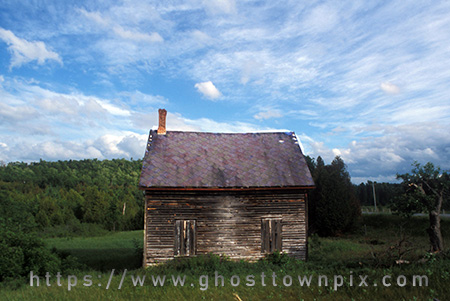
©Jeri Danyleyko
In 1987, the Herron Mills Bridge was opened, with a new sign, proudly proclaiming the name of the tiny village, standing alongside it. The only problem is there’s nothing there. Herron Mills is a ghost town and has been for many years. With the exception of one house built by John Gillies, the original founder of the mills, Herron Mills is nothing but ruins.
John’s parents, James and Helen, arrived in Canada from Scotland in 1821. Accompanied by their brood of five children, that included 10-year old John, the Gillies family landed in Quebec City and from there made the arduous journey up the St. Lawrence to Brockville and then onward by cart and foot to their land grant on Lot 10, Concession 5, in Lanark Township.
James and Helen had been relatively successful farmers in their native Scotland. They chose to migrate not because of economic conditions, but rather because they believed there were more opportunities and a greater future in the new continent. Young John was about to become the embodiment of that dream.
In 1840, John and his new wife Mary had settled on Lot 9, Concession 3, along the Clyde River. John believed the location would make an excellent mill site, so much so that he purchased an adjacent 100 acres of land. He built a home, added a dam on the Clyde River and built a small sawmill that he could operate during the summer season.
Over time John expanded his operation to include a gristmill, oatmeal mill and a wool and carding mill to service the local sheep farmers. He reportedly hauled logs from nearby properties and sold boards for $6 to $8 per thousand board feet. He then purchased a larger circular saw and began taking on much bigger contracts. The area eventually took on the name of Gillies’ Mills and John was able to offer year-round employment to local men who were able to do logging in the winter and work as mill-hands during the summer. In 1861, he built a beautiful new home to accommodate his large family of nine children.
By 1862, John began to feel that opportunities in the Lanark area were becoming stifled. Depletion of lumber supplies around the Clyde River led to increased costs and the necessity to transport trees from much further regions. In 1862, he purchased timber rights further west, in the Trenton area, and gradually began shifting his base of operations. In 1864 he put Gillies’ Mills up for sale.
Gillies’ Mills remained for sale until 1871 when the Herron brothers, James and John, also immigrants from Scotland, arrived. In contrast to John Gillies’ somewhat jaded view of the area’s long-term prospects, the Herrons were enthusiastic about the area’s future and purchased the mills along with 100 acres of cleared farm land. They immediately added a bake house, shingle mill and accommodation and outbuildings for their workers. John Munroe added a tannery that operated for a number of years. Soon after the Herrons took over, they renamed the settlement Herron Mills.
One major difference between the Gillies and Herron operations was the strong community spirit. Although John Gillies was a well-liked and respected businessman, social activities grew in abundance with the arrival of the after the Herrons took over. Recreation included winter skating on the mill pond, followed by bonfires and hot meals for all in the Herron household. In addition, the Herrons also established a school. Local families partially compensated the teachers with room and board. .
One of the most important functions was the opening of the post office in 1891. The post office was located in the large family home, built by John Gillies. James Herron and his wife jointly operated the post office until 1915 until its closure with the arrival of rural mail delivery.
The Herron brothers’ optimism about the mills’ future turned out to be amply justified. Serious damage to the dam occurred during the spring floods in 1896. The brothers quickly reinforced and rebuilt the dam further upstream. By the beginning of the 20th century, the Herrons were sawing about 8,000 board-feet of lumber per day. Up to 20 employees worked at the mill during the busy season. The brothers finally ended their partnership in 1919, after 38 successful and profitable years. James’ son, Alexander, took over the helm.
Unfortunately, Herron Mills did not survive the depression. The wool and carding mills and sawmill disappeared in the early 40s, although sawing still took place sporadically for local interests. Alexander passed away in 1946. His sister Mary, operated the business until 1951, when it closed permanently.
Today, apart from the handsome Gillies home, most of Herron Mills lies in ruins. Although the ruins lie on private property, the remains of the dam and many of the early structures are quite viewable from the roadside. A new owner acquired the property and renovated the Gillies’ home quite extensively. Unfortunately the photogenic sawyer’s home did not survive the upheaval, a victim of serious structural damage over the years.
NOTE: The Herron Mills buildings are located on privately owned property. Structurally they are unstable and dangerous. Please show some respect and DO NOT explore the area unless you have permission from the owners. Otherwise you could be leaving yourself open for charges of trespassing. There is still a great deal that can be seen from the roadside.
A portion of this information originated from an article written by Bernard Shaw that appeared in The Country Connection.